Wednesday, December 30, 2009

2009, only the high points

“…and I remember that some of it wasn’t very nice. But most of it was beautiful. But just the same, all I kept saying to everyone was, I want to go home….and they sent me home. Doesn’t anybody believe me?”


Probably you know 2009 won’t go down in my personal history as a favorite year. But I can’t say it hasn’t been interesting. Over the past nine months I’ve hit a lot of new highs and also despaired just as often — may you never find out to what extent. But I’m not just being plucky when I say this year was memorable.

High points included:

· Launching SuperScript, my editing business, which (thank you Jesus, Mary & Joseph) is doing decently well for a new endeavor
· Having PATA’s Spotlight Award bestowed upon me (it’s kind of a like a People’s Choice award from Portland theater folk) when I wasn’t expecting it
· Working with the fabulous people of Wordstock

A few other favorite things:

Most compelling novel I read this year: The Brief Wondrous Life of Oscar Wao, by Junot Diaz. Yes, I realize you all read it last year, but what can I say, prior to 2009 I read mostly scripts — at least one a day—for many, many years.

No, I will not select a favorite script of 2009. Too many good ones to mention.

Short story that most bowled me over: Jon Raymond’s devastating “Train Choir” from Livability.

Favorite new music album: can’t decide between the gloomy claustrophilia of Twilight by The Handsome Family (a 2001 release, actually, thus only new to me) or the gleeful psychedelic revival of Merriweather Post Pavilion by the Animal Collective (turn up the volume on the video below to see what I mean).


Beloved musical rediscoveries: “Funny How Love Can Be,” in dueling editions produced by The Ivy League (soulful and a capella) and Harper’s Bizarre (hypercaffeinated), way, way back in the 1960s; also, from the same era, “I Woke Up This Morning,” by We Five (thank you Cousin Tabitha) and “Summer Song,” by Chad and Jeremy.

Favorite theater productions here in Portland: Ragtime (PCS); Apollo, by Nancy Keystone (PCS); Adam Bock’s The Receptionist(CoHo Theatre); Teeth of the Sons by Joseph Sousa (Re-Theater Instrument); Everyone Who Looks Like You (Hand2Mouth); The Lying Kind (Third Rail).

Biggest epiphany transmitted via TV show: Don Draper taking the kids out trick-or-treating, when a parent doling out candy says to him: “And who are you supposed to be?”

So much for the past year. Happy 2010. Let’s usher out the (n)aughts now and look forward to the tweens.

Saturday, December 26, 2009

Hey, Happy St Stephen's Day!


Today we celebrate the Feast of St Stephen – an odd commemoration to come so hard upon Christmas, since Stephen was stoned to death early in the first century for blasphemy, whatever that meant prior to the Inquisition. For his transgressions, the saint was killed by a mob that was egged on by St Paul before he was St Paul – prior to setting forth for Damascus and all that.

Check out the allegorical portrait on the left. Those things that looks like potato epaulets represent stones. Often, though not alas in this picture, Stephen is shown holding a miniature church. Because he is, after all, a protomartyr.

Anyway, December 26 is traditionally his day. St Stephen is the one on whose feast day Jolly Old King Wenceslas went forth. He was also beloved of the Grateful Dead, who had this to say about that:

Saint Stephen will remain, all he's lost he shall regain,
Seashore washed by the suds and foam,
Been here so long, he's got to calling it home.

Fortune comes a crawlin', calliope woman, spinnin' that curious sense of your own.
Can you answer? Yes I can. But what would be the answer to the answer man?


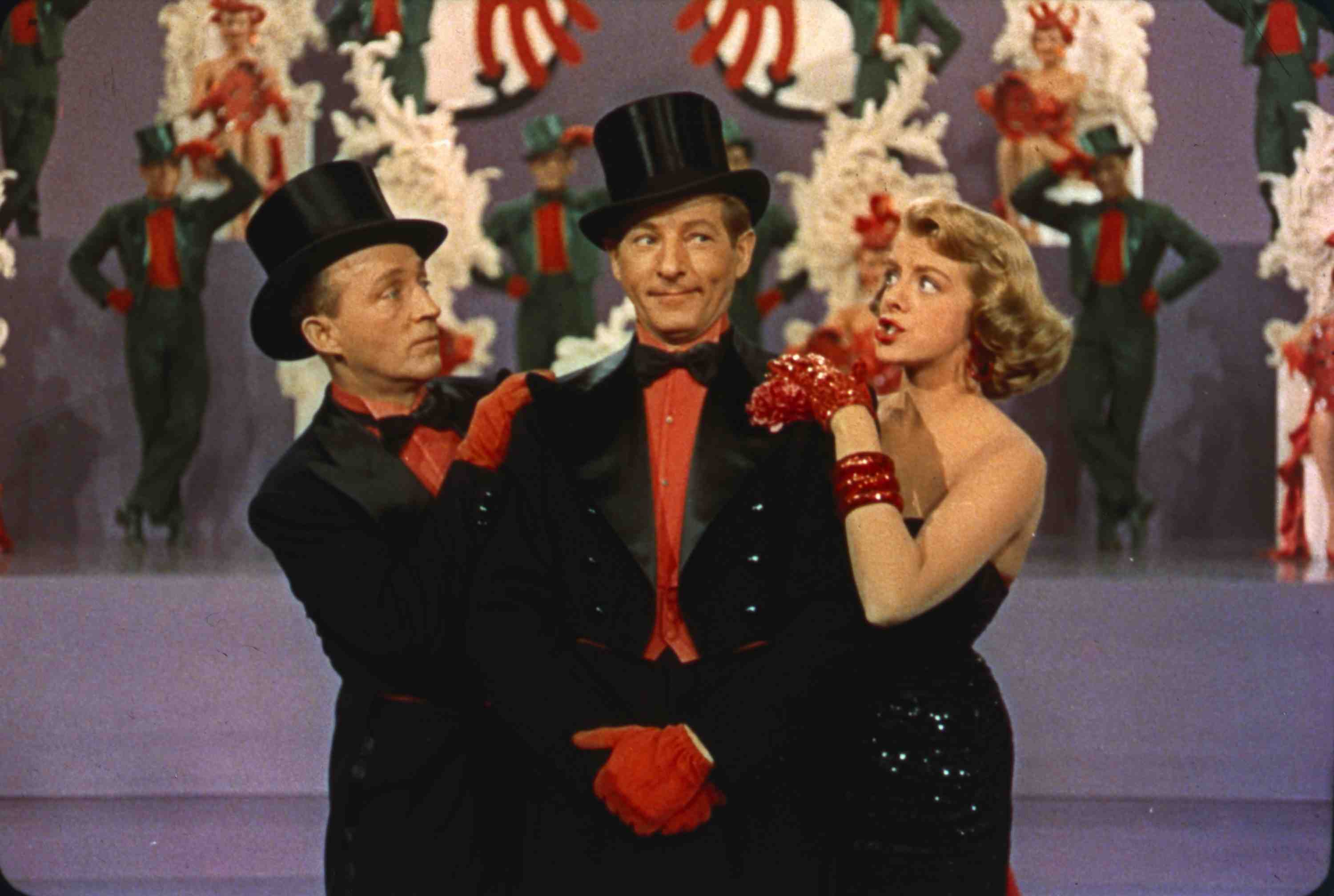
Though I could find nothing that explains why Stephen got saddled with the anticlimactic date of 12/26, I for one welcome the shift back to satisfying, definite narrative closure. A steady diet of holiday fare was beginning to make me glucose intolerant. Last night, for example, following a stultifying smorgasbord in which dessert lasted long than the actual dinner, we all watched White Christmas, the Bing Crosby vehicle. Some eye-popping choreography in it (including a well-observed spoof of Agnes DeMille’s dance vocabulary), but like most such confections, it ended the minute everybody got married. Doesn’t that strike you as unversimilitudinous? For many of us, our stories really got interesting after we got married.


Yes, the beat goes on. Which is to say: just because you’ve not yet been stoned to death doesn’t mean that fate doesn’t await you. To wrench Elvis Costello out of context, postmartydom may be a death worse than fate. Happy New Year!

Thursday, December 24, 2009

20 years of unwedded bliss


My brother-in-law, poor guy, had the misfortune to be born on Christmas Eve 50 years ago. Consequently, he says, his birthday got overlooked for most of his childhood, amid the annual gallop through the holidaze. So several years ago we started a tradition of having a special dinner out, somewhere fun, for the express purpose of celebrating his nativity – no mention of the holidays allowed.

This year we did this 24 hours early, taking over the back room at Lucca. And midway through a fabulous and raucous dinner, it came to me that JFF and I met that very night 20 years earlier.

Now: we’re an unsentimental pair, and many’s the year we’ve forgotten our own anniversary amid the mad haste to get presents under the tree. But 20 years seems like a milestone, and this time even we are appalled at our failure to make a fuss out of ourselves.

The occasion calls for saying something heartfelt. But here I am yet again, trying to stuff this post in between a client who is desperate for me to edit another chapter of his novel before Mercury retrograde sets in on the 26th and starting Christmas Eve dinner. (It’s a exceptionally voluptuous ratatouille, by the by, with an augmented dulce de leche for dessert. Yes, thank you.)

So just let me say this. It’s a marvelous thing to have lived through the early years of getting to know each other, and for all the attendant up and downs to have merged into trust. To get to where you no longer fight, really – just occasionally squabble, and to know when you do that it’s comical. And to get to where you can assume you’ll always be together. Barring a particularly bad case of late mid-life crisis, assuming that catastrophe doesn’t impair someone’s health beyond repair, and hopefully escaping some unlooked for accident (and aren’t they are unlooked for?) . . . we expect to always be together.

Until we’re not, of course. Till death we part. Which is what’s so poignant about an anniversary, really. You celebrate your years together. You estimate how many may be left.

The downside of anniversaries? After 20 years, it’s very hard to give a present that isn’t in some way actually for yourself.

Actually, our date depends on when you started counting. We met 20 years ago yesterday. But we moved in together exactly one year later. So what do you say we call this is our 19th anniversary? That gives us a whole year to plan, prepare and forget to celebrate all over again.

Tuesday, December 22, 2009

Adventures in urban anthropology


In my neighborhood of Irvington, there is a plethora of elementary and middle schools: public, parochial, what have you (as Sister Michael Anthony used to say back when I was a pock-marked middle-schooler). Consequently, while walking the dog, I come across a lot of dropped paper items -- everything from report cards to draft-form love letters.

The note on the left arrested my attention. Obviously it's part of some sort of game; the flap on the bottom (the paper was folded up when I found it) displays several options, including to make out, to kiss or -- I think -- to "bunch." Or are all those things the same?

But it's the names that intrigue me. It's safe to say we've come a way from the bland Toms and Marys and Johns that populated my early education. I love the breadth of these appellations, but Isis? That's a lot to live up to.

Monday, December 21, 2009

Comfort and Joy

Today is the Winter Solstice – an intriguing term, from those assiduous ancient astronomers, meaning figuratively “sun stands still,” or more literally, “sunstop.” Today the sun is at its greatest distance from the celestial equator -- the southernmost point. Hence today is the shortest day of the year and tonight the longest. Hooray!

For those of you who tire quickly of winter’s shenanigans, this means that from now on, nights will start getting shorter — imperceptibly, at first, but assuredly.

I can see how this would have cheered the ancients – the knowledge that though the earth seemed irrevocably dead, and was going to be get deader before winter was over, at least you knew the tide of darkness was already ebbing, and in due course day would predominate again. This still holds true for most of humanity, and perhaps especially this year for my snowed-in friends back east who must make the most of the endless nights.

Naturally, though, imp of the perverse that I am, I love that it’s dark when I awake and that the night lasts so long. But then again I live on the west side of the mossy, damp Pacific Northwest, where a white Christmas like we had last year usually lasts for hours, not months.

Winter Solstice came and went at 9:47am here in the Cascadia. And though my fellow creatures of the night and I lament that darkness is now waning, I take comfort from the constant sound of water dripping from the pines and the parti-colored lichens partying everywhere like it’s 2009.

Hey, just to rub it in, let’s listen to the regional theme song:

Saturday, December 19, 2009

Another kind of Advent


Oy vey, I've been meaning to pass this on to you all week, and now here it was Publication Fair Eve already. But come if you can:

Sunday, 11am-6pm at The Cleaners at the Ace Hotel (SW Stark between 10th + 11th). See the best in books, magazines, and printed matter from your favorite PDX printers, publishers, and publication vendors. Enjoy popcorn balls and hot cider. Take part in free public info sessions about the ins & outs of future publication. Buy great books!

Among the participants:

Ace Hotel / Ampersand / Container Corps / Cooley Gallery / Dill Pickle Club / EM-SPACE / fourteen30 Contemporary / Hawthorne Books / IPRC / Mark Searcy / Marriage Publishing House / Publication Studio / Octopus Books / Official Manufacturing Co. / Ooligan Press / Peaches + Bats / PICA / Pinball Publishing / Reading Frenzy / Red 76 / Stand Up Comedy

For more information visit: http://www.publicationstudio.biz/events/

Friday, December 18, 2009

Pagans vs Christians


Here in Oregon, one of the season’s best spectator sports is watching the annual skirmish surrounding Christmas trees. Just a couple of weeks ago, an Ashland school banned the display of a decorated tree on the grounds it was associated with Christianity and thereby implicitly excluded other religions. A bemused bystander wrote a letter to The Oregonian recalling that when she was growing, Christmas trees were verboten at her church because they were regarded as Pagan artifacts.

What amuses me is that the school in question replaced the Tannenbaum with a pair of snowmen, reminding me that the severe Sister Aloysius from John Patrick Shanley’s play Doubt had something to say about that:

Sister Aloysius: "Frosty the Snowman" espouses a pagan belief in magic. The snowman comes to life when an enchanted hat is put on his head. If the music were more somber, people would realize the images are disturbing and the song heretical.

Sister James: I've never thought about "Frosty the Snowman" like that.

Sister Aloysius: It should be banned from the airwaves.


That’s about how it goes here. For many of us the whole holiday is thoroughly secular anyway; we never think about the Christmas tree as a pawn in the culture wars.

For the record, though, this time the Christians are semi-closer to the truth. European Pagans did not cut down trees and bring them into the house, but there were widespread traditions of adorning evergreens where they stood naturally. Boughs of evergreens were brought inside to celebrate the return of the light that the winter solstice represented. (Related side note: the “partridge in a pear tree” from “The 12 Days of Christmas” song was originally “a part of a juniper tree.”)

No, reportedly the tradition of hauling a tree indoors and putting lights on it is relatively recent -- 16th century Germany. These “Paradeisbaum” (paradise trees) first showed up in America along with German immigrants, circa 1700. Christmas trees didn’t catch on with Americans in general until around 1850, by which time Dickens’ famous novella had made Christmas downright fashionable – though interestingly, there are no such trees in Dickens’ tale and only one direct reference to Christianity.

For me, the tree is a reminder of life in death – or if that sounds a tad grim, as a reminder that you need winter to give way to spring. Out of death comes renewal. To be less baleful about it, it’s also a great excuse to haul out the ornaments we’ve collected over the decades, each of which is imbued with a story and with memories. Though I agitate every year for the ultramodern aluminum tree of my childhood, I have to admit that there’s something magical about this annual guest that we water and tend to and revere … before tossing it into on the curb a few weeks later.

I always feel ashamed about that part.